
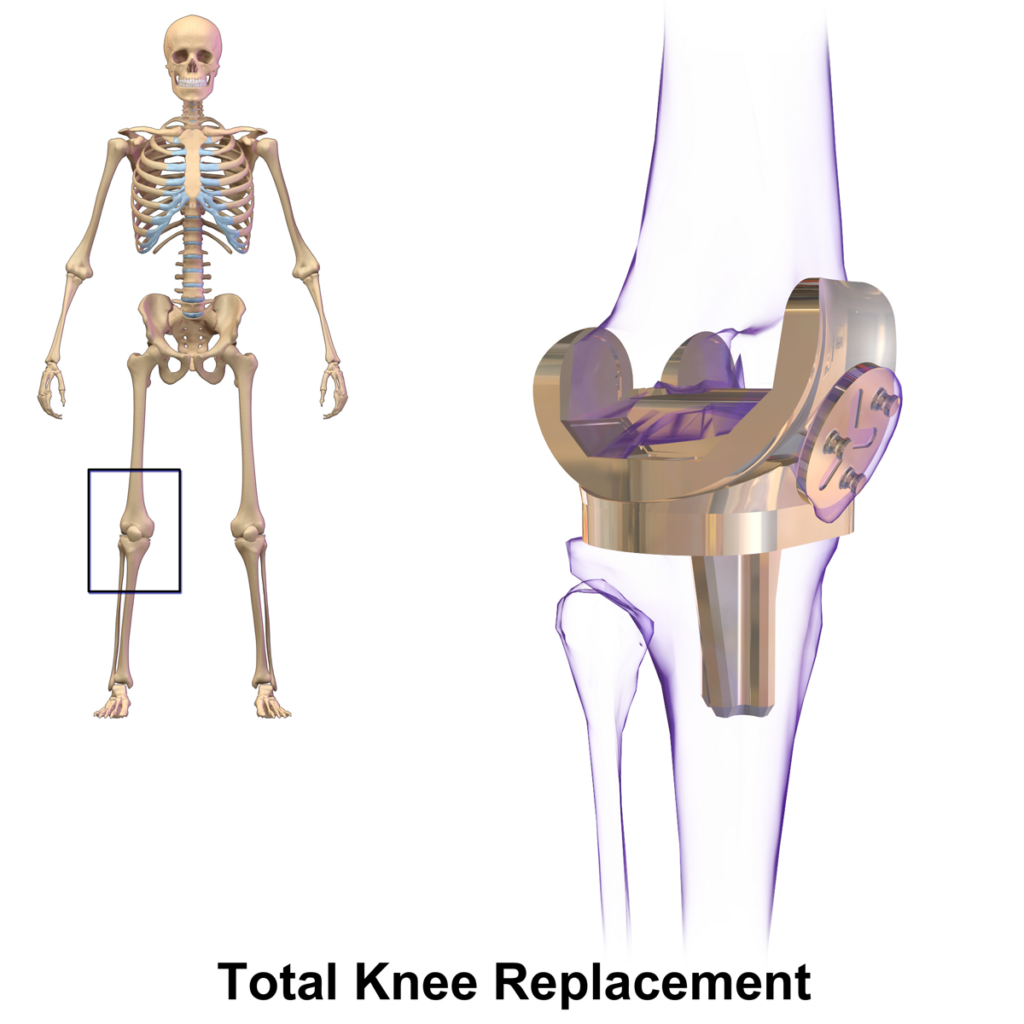
Knee replacement has been performed successfully for more than fifty years. What has changed dramatically in the last decade is not the implant itself, but the precision with which it is positioned. Robotic-assisted surgery is the clearest example of that shift.
What robotic assistance actually does
The robot does not perform the operation. It is a guidance system. Before surgery, a CT scan is used to build a three-dimensional model of the patient knee, including the exact shape of the bone and the alignment of the leg. The surgeon uses that model to plan implant size, position and rotation down to a fraction of a millimetre.
During the procedure, the robotic arm holds the cutting guide within the boundaries of that plan. If the instrument strays outside the planned zone, the system stops it. The surgeon retains full control of every decision; the technology simply removes the variability that comes from working by eye and by feel alone.
Why alignment matters so much
An implant that sits even a few degrees off the intended axis loads unevenly. Over years, that uneven loading can cause pain, stiffness, accelerated wear of the polyethylene bearing and, in some cases, early loosening. Accurate alignment and correct soft tissue balance are the two factors most strongly associated with a knee that feels natural and lasts.
What patients tend to notice
- Smaller bone cuts and less soft tissue disturbance
- Less swelling through the first two weeks
- Earlier comfortable range of movement in physiotherapy
- A joint that feels more like their own knee than a mechanical one
Who is a candidate
Most patients who need a knee replacement can have a robotic-assisted procedure. It is particularly valuable in knees with significant deformity, in patients with previous fractures or retained hardware, and in partial knee replacement, where the margin for error is smaller.
An honest note
Robotic assistance improves accuracy. It does not replace surgical judgement, and it does not turn an unsuitable candidate into a suitable one. The decision to operate, the choice of implant and the handling of the soft tissues still rest entirely with the surgeon. Technology raises the floor; experience still sets the ceiling.
This article is for general education only and is not a substitute for a clinical consultation. Every joint, and every patient, is different. Please discuss your own case with a qualified orthopaedic surgeon.
Image credit: Illustration by BruceBlaus, via Wikimedia Commons, CC BY-SA 4.0